Draw The Bike Bridge
In Draw The Bike Bridge, every level drops you into a rugged landscape where a returning rider has hit a dead end. Your job is to turn blank space into safe passage, sketching out lines that become the physical link between one cliff and the next. Nothing about the bridge is pre-made; you decide its curve, length, and thickness, and your drawing acts as a real object from the moment you lift your finger.
 WaffleMath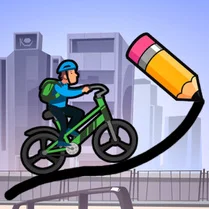
Common Core State Standards
Every game supports specific Common Core standards. Browse the full standards library.
Practice by Skill
Games by Grade
What is Draw The Bike Bridge
It's a simple premise with endless possibilities: draw a bridge, save the rider. Each level asks you to think on your feet, adapting your sketch to tricky gaps, moving surfaces, and unpredictable physics.
How to Play
Drag your finger or mouse to draw a line, forming the path you want the bike to cross. Once you're happy with the shape, let go and watch the rider ride over it — or crash trying.
Tips for Playing
- Keep bridges flat for long stretches; sudden angles can flip the bike.
- Make the line thicker in the middle to support the rider's weight better.
- Study the gap from both sides before committing to a shape.
- Use a gentle upward slope at the end to help the bike slow down naturally.
- Test your design quickly, because a rushed drawing rarely holds.
Frequently Asked Questions
What happens if the bridge is too thin?
Thin lines break easily under the rider's weight, causing a crash. You'll need to retry with a thicker, stronger sketch.
Can I pause mid-level?
Yes, the game lets you pause before you finalize your drawing. Take your time to plan the best route before letting the rider start.
Is there a limit to how many lines I can draw?
You're limited to the space on the canvas, but within that you can draw multiple lines. However, only one bridge at a time works — extra shapes might block your path.
Do moving platforms affect my bridge?
Absolutely. If the gap has a moving platform, your drawing must align with its movement, or the rider won't be able to use it safely.
What's the best strategy for steep gaps?
Use a long, gently rising line that levels out on the far side. A sharp V-shape can trap the bike and lead to a nasty tumble.
How do I unlock new levels?
Progress by completing current levels. Each successful crossing opens the next challenge, making the puzzles more complex as you go.
Related Puzzle Games
 Save My Pet
 Dirt Bike MotoCross
 Brain It On
 Draw The Bridge
 Draw Crash Race: Stunt Race
 Happy Glass 2 - Draw to FIll
 Draw The Hill
 Bike Stick
 Draw Action
 Happy Glass Online
 Stick Biker
 Draw The Truck Bridge
 Stick: Draw Road
 Draw The Ball Path
 Draw Bridge: Puzzle Challenge
 Draw a bridge: Space
 Crazy Pencil
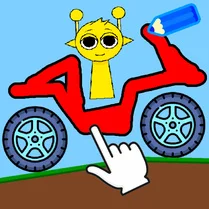 Draw Sprunki car with physics!