Solitaire "Spider" traditional
Spider Solitaire asks you to tidy up a messy tableau by forming ordered runs from King down to Ace, all in the same suit. The twist is that you start with several suits mixed together, so every move requires planning and a keen eye for the cards you need. Although the goal is straightforward, each deal offers a fresh puzzle that tests your patience and strategic thinking. It is a quiet, thoughtful game that rewards careful play over speed, making it a favorite for those who enjoy a mental workout. The game progresses through multiple levels of difficulty, beginning with a single suit and eventually mixing all four. As you remove completed sequences, the table slowly clears, giving you room to maneuver and reorganize the remaining cards. New cards from the stock can be dealt when you are stuck, but each deal adds more to manage. Success comes from balancing short-term moves against long-term goals, so every decision matters. Whether you are a beginner or a seasoned player, Spider Solitaire offers a deep and satisfying experience that is easy to pick up but hard to put down.
 WaffleMath
Common Core State Standards
Every game supports specific Common Core standards. Browse the full standards library.
Practice by Skill
Games by Grade
What is Solitaire "Spider" traditional
Spider Solitaire is a timeless card game that challenges you to arrange a full deck into neat sequences. With its simple rules and deep strategy, it is perfect for casual play or serious puzzling.
How to Play
Click and drag cards to move them, building descending same-suit runs on the tableau. When you complete a full King-to-Ace sequence in one suit, it is automatically removed from the board.
Tips for Playing
- Focus on building runs of the same suit whenever possible, even if it means moving cards temporarily.
- Only deal from the stock when you have at least one empty column to maximize flexibility.
- Try to keep your tableau columns balanced in length to avoid getting stuck.
- Empty columns are your best friends—use them to cycle cards and build longer sequences.
- Before moving a card, think about how it affects future moves; a short-term gain can cause a long-term loss.
Frequently Asked Questions
What is the object of Spider Solitaire?
The goal is to remove all cards from the tableau by building complete descending sequences from King to Ace in the same suit. The game is won when all eight sequences are removed.
How many suits are used in Spider Solitaire?
It depends on the difficulty level. You can play with one, two, or four suits. More suits make the game harder because you must match suits exactly for sequences.
Why can't I move a card onto another card?
In Spider Solitaire, you can only place a card onto a card of the next higher rank, and the moving card must be part of a sequence that is all in the same suit.
When should I deal new cards from the stock?
You can deal a new row of ten cards when no column is empty, but it is usually best to deal only when you have an empty column to help reorganize the new cards.
What happens if I run out of moves?
If the stock is empty and no moves are possible, the game is over. You can reshuffle and try again, or undo your moves to find a different strategy.
Is Spider Solitaire a game of luck or skill?
It is mostly skill, though the initial deal includes an element of luck. Careful planning and strategic moves can greatly improve your win rate.
Related Card Board Games
 Solitaire Spider. Classic
 New Solitaire
 Solitaire Puzzle
 Incredible Solitaire
 Clean Solitaire: Klondike
 Epic Solitaire «Klondike»
 Gaps Solitaire
 Gaps Solitaire 2026
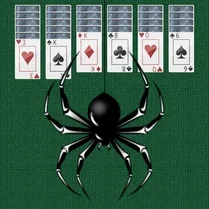 Good Old Spider Solitaire
 Lay out the cards: Scorpio Solitaire
 Lay out the cards: Solitaire Alternation
 Lay out the cards: Solitaire Carpet
 Lay out the cards: Spider Solitaire
 Little Spider Solitaire
 Men's Solitaire "Klondike"
 Solitaire Spider 2023
 Solitaire Spider 2025
 Solitaire Spider - Deluxe