Little Spider Solitaire
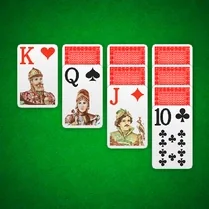
This isn't your ordinary solitaire. Little Spider Solitaire hands you two full decks and a sprawling tableau of ten columns, asking you to build eight neat stacks from King down to Ace, each limited to a single suit. The catch? You can only move whole sequences, and empty columns become valuable real estate for reshuffling your options. It's a mental workout that rewards foresight over sheer luck, blending classic card-play logic with a satisfyingly tricky layout. Every move counts as you dig through face-down cards, hoping to uncover what you need without boxing yourself into a corner. The game offers a gentle pace at first, but the complexity sneaks up as the tableau fills with partial stacks and limited moves. With no timer rushing you, it's a calm yet engaging brain teaser for anyone who enjoys a quiet challenge. Can you untangle the chaos and empty the board?
 WaffleMath
Common Core State Standards
Every game supports specific Common Core standards. Browse the full standards library.
Practice by Skill
Games by Grade
What is Little Spider Solitaire
If you enjoy a slow-burn card puzzle that tests your planning, Little Spider Solitaire offers a fresh twist on the genre. It's all about patience, pattern-spotting, and making smart moves with limited resources.
How to Play
Click on a card or sequence to move it to another column, but you can only shift groups of cards in perfect descending order of the same suit. Build foundation piles from King to Ace in each suit, using empty columns to rearrange and expose hidden cards.
Tips for Playing
- Use empty columns as staging areas to break down long same-suit sequences.
- Always prioritize uncovering face-down cards before focusing on foundation builds.
- Avoid filling a column with a King unless you're ready to commit to that suit.
- Plan several moves ahead—treat each column as a puzzle piece in the larger layout.
- Keep foundation-building for the end; use early turns to tidy the tableau instead.
Frequently Asked Questions
What is the objective of Little Spider Solitaire?
Clear all cards by building eight foundation piles, each containing one suit from King down to Ace. The game ends when all cards are stacked.
How many decks are used in this game?
Two standard 52-card decks are shuffled together, giving you 104 cards spread across the tableau and stock.
Can I move multiple cards at once?
Yes, but only if the cards form a descending sequence of the same suit. For example, you can move a 7-6-5 of hearts together as one group.
What happens if I run out of moves?
You can deal a new row of cards from the stock if available, and you can also use empty columns to rearrange the tableau. If no moves remain, you may need to reshuffle or restart.
Is there a timer or scoring system?
The game focuses on strategy over speed, so there's no timer pressure. Some versions may track moves or completion time, but the core goal is simply to finish.
Why can't I move a card to an empty foundation?
Foundations only accept cards in a specific order—starting with Kings and building downward. If you try to place a card that doesn't fit the sequence, it won't be allowed.
Related Card Board Games
 Good Old Spider Solitaire
 Solitaire Spider. Classic
 Solitaire "Spider" traditional
 Solitaire
 Spider Solitaire 2024
 Classic Solitaire
 New Solitaire
 Magic Story of Solitaire
 Solitaire Puzzle
 Incredible Solitaire
 3 Peaks Solitaire
 Agnes Solitaire
 Algerian Patience
 Best Solitaire Games: Spider
 Clean Solitaire: Klondike
 Desire Solitaire
 Double Klondike Solitaire
 Epic Solitaire «Athena»