Sigma IQ
Sigma IQ is a number-based puzzle game that turns simple arithmetic into a compelling mental challenge. Each level presents a grid filled with numbers and a set of target sums, asking you to connect or arrange digits in ways that meet those targets while respecting specific rules on placement and sequence. The early puzzles ease you in, but the complexity climbs quickly, introducing more intricate arrangements and tighter constraints that demand both logical planning and a solid grasp of basic math. What makes Sigma IQ stand out is how it blends calculation with spatial reasoning. You are not just crunching numbers; you are also thinking about where each digit should go and how your choices affect the overall layout. The game offers a clean, focused experience that is perfect for sharpening your mind during a short break or a longer session. With its progressive difficulty and satisfying moments of clarity when a puzzle finally clicks, Sigma IQ is a rewarding workout for anyone who enjoys a good brain teaser.
 WaffleMath
Common Core State Standards
Every game supports specific Common Core standards. Browse the full standards library.
Practice by Skill
Games by Grade
What is Sigma IQ
Sigma IQ is a math puzzle that will have you arranging digits to reach specific sums. It is a clever mix of arithmetic and spatial thinking that gets harder with every level.
How to Play
Your goal is to select or position numbers on the grid so that they add up to the sums shown for each row, column, or segment. Keep an eye on the layout rules, as each puzzle’s conditions can change how you connect the digits.
Tips for Playing
- Start with the largest target sums, as they often force which numbers must be used together.
- Look for obvious pairs or triples that add up exactly to a target; they give you a solid anchor.
- If you get stuck, try working backward from the target to see which digits could be subtracted out.
- Pay attention to the placement rules; sometimes a digit can only be used once per row or column.
- Take a break if you are frustrated—a fresh look often reveals the solution right away.
Frequently Asked Questions
What happens if I run out of moves?
There is no time limit, and you can usually reset a puzzle or undo moves to try a different approach. The only fail state is getting stuck, but you can always restart the level.
Is Sigma IQ purely a math game?
It is primarily math, but it also involves logic and spatial reasoning, because you have to decide where to place numbers and how they connect, not just what sums to make.
Can I play Sigma IQ on my phone?
Yes, the game is designed to work smoothly on both desktop and mobile browsers, though the experience is best on a screen large enough to see the whole grid.
Are there different difficulty levels?
The puzzles get progressively harder as you advance, but there is no separate menu for difficulty. You will simply face more complex grids and targets as you go.
Does each puzzle have only one solution?
Most puzzles are built so that there is at least one correct arrangement, but some may have multiple ways to reach the same sums. The goal is simply to meet the targets within the rules.
What does 'Sigma' mean in the title?
Sigma is the Greek letter often used to denote summation in mathematics. In Sigma IQ, it reflects the core challenge of making sums, so the name is a nod to the math behind the puzzles.
Related Puzzle Games

 Master of Numbers
 Digit Shooter
 Jigsaw Sudoku
 Move the match
 2248 Logic Puzzle
 Growing numbers: Connect and Purify
 Matches Puzzle
 Ultimate Sudoku
 Merger: One Million
 Boost Your Brain!
 Growing numbers
 Numbers: 10 in a Row
 The New Puzzle 2248
 Merge Squad: 2048
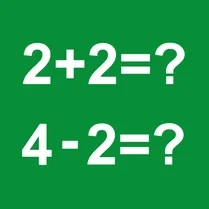 Addition and Subtraction
 Anime sudoku
 Binary trainer
 Brain Training