Nonogram: Japanese Puzzle
Nonogram: Japanese Puzzle turns a simple grid into a playground for logical deduction. Each row and column carries a series of numbers that hint at the lengths of consecutive filled blocks, but the exact placement is yours to figure out. By carefully cross-referencing these clues, you gradually build a monochrome masterpiece from blank squares. The process feels like solving a mystery, where every correct mark brings the final image closer into focus. What makes this brain teaser so appealing is its meditative rhythm. You start with easy, small grids that teach the fundamentals, then progress to larger, more intricate designs that demand patience and careful planning. The moment the picture finally emerges—be it an animal, an object, or a pattern—delivers a satisfying payoff that keeps you reaching for just one more puzzle. The clean, uncluttered interface lets you focus purely on the logic at hand, making it an ideal pick for a quick mental workout or a longer relaxing session.
 WaffleMath
Common Core State Standards
Every game supports specific Common Core standards. Browse the full standards library.
Practice by Skill
Games by Grade
What is Nonogram: Japanese Puzzle
Put your logic to the test by turning numbered clues into beautiful pixel art. Each puzzle is a fresh mental challenge with a visually rewarding finish.
How to Play
Use the numbers on each row and column to determine which cells to fill and which to leave empty. Fill or mark cells by clicking or tapping, and solve all rows and columns to reveal the hidden picture.
Tips for Playing
- Always start with rows or columns that have the largest clue numbers, as they often force the most cells.
- Mark cells you know are empty with an X to avoid confusion later.
- Work from the edges inward when a clue is close to the grid boundary.
- Re-evaluate each row and column after every new fill, since one placement can change everything.
- If you get stuck, take a break and return with a fresh perspective.
Frequently Asked Questions
What is the objective of Nonogram: Japanese Puzzle?
The goal is to fill in the correct cells on a grid based on numeric clues to reveal a hidden pixel art image. Each row and column's clues tell you the exact lengths of consecutive filled blocks.
How do the number clues work?
Each number represents a run of filled cells in that row or column. For example, '3 1' means a block of three filled cells, followed by at least one empty cell, then a single filled cell.
Can I undo a move if I make a mistake?
Yes, most versions of the game include an undo button that lets you revert your last action. Use it whenever you're uncertain about a placement.
Are there different difficulty levels?
Absolutely. Puzzles typically range from small, simple grids for beginners to larger, more complex layouts that will challenge even seasoned solvers.
What happens if I fill the wrong cell?
In many versions, the game will mark an error, and you may lose a life or need to correct it manually. It's best to double-check your logic before committing.
Is there a time limit?
No, the game is entirely stress-free and allows you to solve at your own pace. There's no rush, so focus on accuracy over speed.
Related Puzzle Games
 Nonogramm: Nono cross
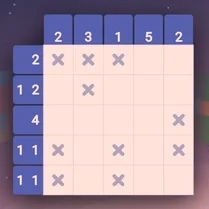 Beautiful Nonograms - Japanese crossword puzzle
 NonoCross: Nonogram puzzles
 Nonogram
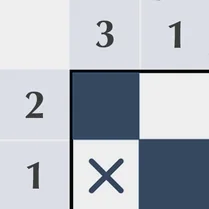 Nonogram - Picture Cross
 Pic-a-Pix Nonogram Puzzle
 Roll Out! Exit from traffic
 Pentomino
 Yamabusi. Japanese Crosswords
 Sudoku Guru - classic sudoku
 Complete the block puzzle
 Sudoku Com
 Sudoku - logic game
 Sudoku Master
 Connect animals: Zoopixel
 Assemble Block Puzzle
 Assemble blocks in puzzle
 Beaded Pictures