NonoCross: Nonogram puzzles
NonoCross is a pure logic challenge that turns cold numbers into colorful pictures. Each puzzle presents a blank grid with numbered hints along the top and side. These clues tell you how many consecutive filled cells appear in each row or column, letting you deduce the exact pattern. It’s a satisfying mental workout that sharpens your reasoning with every solve. With a wide range of grid sizes and difficulty tiers, there’s always a new challenge waiting. Beginners can ease in with small 5x5 boards, while veterans can tackle sprawling 20x20 brain-teasers. The reward for each correct solution is a delightful pixel-art reveal that makes the effort feel worthwhile. It’s a calm, focused pastime for anyone who enjoys a good mind game.
 WaffleMath
Common Core State Standards
Every game supports specific Common Core standards. Browse the full standards library.
Practice by Skill
Games by Grade
What is NonoCross: Nonogram puzzles
If you like crosswords or Sudoku, this nonogram game will click right away. Turn numeric hints into beautiful pixel art, one click at a time.
How to Play
Use the numbers on each row and column to figure out which cells should be filled. Click to fill a cell and mark empty ones with an X to keep track of your deductions.
Tips for Playing
- Start with rows or columns that have large numbers or are fully specified, as they are easiest to fill.
- Use X marks to clearly identify cells that must stay empty, which prevents mistakes.
- Look for overlapping positions where a row clue and a column clue force a fill in a certain cell.
- Work from the edges inward, as boundary lines often reveal immediate truths.
- When stuck, revisit a row or column and recalculate your possibilities—small errors can cascade.
Frequently Asked Questions
What is a nonogram?
A nonogram is a picture logic puzzle where you fill cells in a grid based on number clues. Each number tells you the length of consecutive filled blocks in that row or column.
How do I read the clues?
The numbers along each edge tell you the sizes of filled blocks in that row or column, in order. Between each block there must be at least one empty cell.
What happens if I make a mistake?
Incorrect fills can lead to a wrong final image. The game typically highlights errors or prevents submission, but you can undo moves or restart the puzzle.
Are there different difficulty levels?
Yes, puzzles vary from small, simple 5x5 grids to larger 20x20 challenges with more complex patterns. This lets you progress at your own pace.
Is there a time limit?
No, you can solve at your own speed. The game is about careful deduction rather than speed, so take your time.
Related Puzzle Games
 Nonogramm: Nono cross
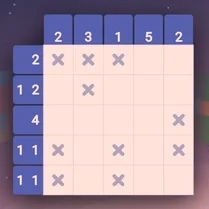 Beautiful Nonograms - Japanese crossword puzzle
 Nonogram
 Nonogram: Japanese Puzzle
 Nonogram - Picture Cross
 Pic-a-Pix Nonogram Puzzle
 Roll Out! Exit from traffic
 Pentomino
 Yamabusi. Japanese Crosswords
 Sudoku Guru - classic sudoku
 Complete the block puzzle
 Sudoku Com
 Sudoku - logic game
 Sudoku Master
 Connect animals: Zoopixel
 Assemble Block Puzzle
 Assemble blocks in puzzle
 Beaded Pictures