Minesweeper Classical
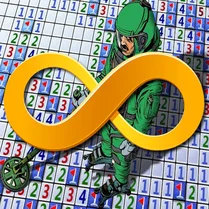
Minesweeper Classical strips away the noise and gets straight to the heart of logical deduction. Each click on the grid reveals a clue: a number that tells you exactly how many explosive tiles sit in the adjacent eight squares. Armed with these hints, you must systematically flag every lurking mine and uncover all safe ground. It’s a battle of wits where careful observation and cautious progression beat reckless clicking every time. The game offers a pure, no-frills experience that scales from a gentle 9x9 beginner board to a sprawling 16x30 expert challenge that will test even veteran players. Whether you’re sneaking in a quick diversion between tasks or settling in for a deep strategic session, the rules are simple to grasp but the puzzle depth is genuinely absorbing. Every decision matters, and one false move can end the run instantly, making each successful clear a small triumph worth savoring.
 WaffleMath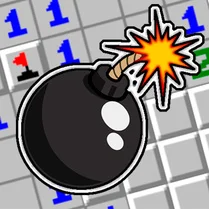
Common Core State Standards
Every game supports specific Common Core standards. Browse the full standards library.
Practice by Skill
Games by Grade
What is Minesweeper Classical
A pure logic puzzle that has captivated players for decades, Minesweeper Classical asks you to clear a minefield using only numerical hints. Can you read the clues and uncover every safe cell without setting off a hidden bomb?
How to Play
Left-click a tile to reveal it; if it hides a mine, the game ends. Right-click to place a flag on tiles you suspect contain mines, and use the revealed numbers to deduce which neighboring cells are safe to open.
Tips for Playing
- Always start by clicking a corner or edge tile; your first click is usually safe and can open up a larger area.
- If a number is surrounded by exactly that many flagged mines, every other adjacent cell is safe to reveal.
- Use middle-click or double-click on a numbered tile to instantly reveal all unflagged neighbors when the flag count matches.
- When stuck, zoom out mentally: look for patterns like a '1-2-1' in a row to identify which cells must be mines.
- Flag every mine you identify; unflagged mines are easy to forget and lead to costly misclicks.
Frequently Asked Questions
What does the number on a revealed tile mean?
The number tells you exactly how many mines are hidden in the eight surrounding cells. For example, a '3' means three of the adjacent tiles are mines.
What happens if I click on a mine?
The game ends immediately, and the minefield is displayed, showing you where all the mines were located. You can start a new game afterwards.
How do I flag a tile I suspect is a mine?
Right-click (or press and hold on mobile) a tile to place a flag. Right-click again to remove it or change it to a question mark if you're unsure.
Can I replay the same board?
Mine placements are randomized for each new game, so every playthrough offers a fresh puzzle. The board size and mine count can be adjusted in the settings.
Is there any way to win without guessing?
In the early stages, you might have to click randomly to open up the board, but once you have enough numbers, all further moves can be solved with pure logic. Some boards require a 50/50 guess near the end, though.
What are the different difficulty levels?
Beginner uses a 9x9 grid with 10 mines, intermediate uses 16x16 with 40 mines, and expert uses 16x30 with 99 mines. You can also customize your own grid and mine count.