Killer Sudoku
Killer Sudoku takes the familiar Sudoku grid and adds a flavorful twist: regions called cages demand that their numbers sum to a specific total. Instead of relying purely on given digits, you must deduce placements through arithmetic reasoning. Each row, column, and 3x3 subgrid still requires the digits 1 through 9 exactly once, but the cage sums introduce a fresh layer of deduction that appeals to number enthusiasts and puzzle purists alike. The result is a satisfying mental workout that rewards systematic thinking and pattern recognition. As you progress, puzzles increase in complexity, with larger cages and fewer initial clues. You'll learn to balance combinatorial logic with basic math, often narrowing down possibilities by considering the sum of a cage versus the entire row or column. The game offers a clean interface and adjustable difficulty, making it accessible for newcomers yet challenging for veterans. Whether you're a casual player looking for a quick brain teaser or a dedicated solver seeking a marathon session, this game delivers a captivating experience every time.
 WaffleMath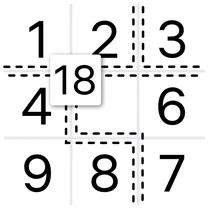
Common Core State Standards
Every game supports specific Common Core standards. Browse the full standards library.
Practice by Skill
Games by Grade
What is Killer Sudoku
If you enjoy Sudoku but crave an extra dash of numerical challenge, this is your game. Killer Sudoku weaves addition into the classic logic puzzle for a more intricate solving experience.
How to Play
Fill the 9x9 grid so each row, column, and 3x3 box contains the digits 1 through 9 exactly once. Within each outlined cage, the numbers must add up to the target number displayed in its corner, with no repeats allowed inside a cage.
Tips for Playing
- Start by looking for cages with low sums or single-cell cages, as they give immediate answers.
- Use the total sum of a row (45) to deduce cage combinations when a cage spans an entire row or column.
- For multi-cell cages, list possible digit combinations that meet the sum and eliminate based on row/column conflicts.
- Focus on cages that overlap heavily with a row or column to unlock more numbers quickly.
- When stuck, revisit cages with few options and cross-check against the standard Sudoku rules.
Frequently Asked Questions
What makes Killer Sudoku different from regular Sudoku?
In addition to the usual row, column, and box rules, numbers in a cage must sum to a specific total, adding arithmetic deduction to the logic.
Can numbers repeat within a cage?
No, numbers in a cage must be distinct, just as in the rows, columns, and boxes, making each puzzle more constrained.
Is there a unique solution to each puzzle?
Yes, every puzzle is designed to have exactly one valid solution, ensuring a fair challenge.
How do I start solving a Killer Sudoku puzzle?
Begin with cages that have small sums or single cells, then use the overall sum of rows and columns to deduce possible combinations.
What should I do if I get stuck?
Re-evaluate cages with limited possibilities, and try eliminating candidates based on conflicts with other rows, columns, or boxes.
Related Puzzle Games

 SUDOKU Zero to Pro
 Sudoky 2D
 Sudoku
 Sudoku Guru - classic sudoku
 Sudoku Com
 Sudoku - logic game
 Sudoku Master
 Block Sudoku Puzzle
 Classic Sudoku
 Cute Sudoku
 A mathematical exercise with numbers for logic
 Mathematical-Numerical Crossword: Numbers
 Math Puzzles: Crosswords
 Math: Riddles
 Sudoku 16x16
 Sudoku 2.0
 Sudoku Art
 Sudoku Bamboo