Hexagonal Minesweeper - Logic Puzzle
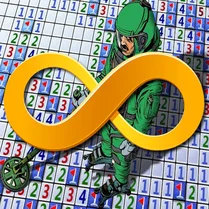
Forget square grids — Hexagonal Minesweeper reshapes the classic logic game into a hive of six-sided cells. Each hexagon you reveal shows a number, telling you how many mines are hiding in the six cells surrounding it. The new geometry creates fresh spatial patterns and forces you to rethink familiar tactics, making every deduction a satisfying puzzle. With each click, you peel back layers of numbers and zeros, gradually mapping out where the danger lies. Your only tools are observation and careful reasoning, as every wrong guess detonates a mine and ends the round. The game's clean visuals and subtle hexagonal layout add a modern, charming look, while the escalating complexity keeps your mind sharp. Whether you're a seasoned Minesweeper enthusiast or new to logic puzzles, the hexagonal twist offers a genuinely new challenge that rewards patience and clever thinking. No rush, no pressure—just you and the grid, deciding which hexes are safe and which are traps.
 WaffleMath
Common Core State Standards
Every game supports specific Common Core standards. Browse the full standards library.
Practice by Skill
Games by Grade
What is Hexagonal Minesweeper - Logic Puzzle
A fresh take on a beloved classic, Hexagonal Minesweeper invites you to uncover a honeycomb of safe cells while dodging hidden explosives. Every hexagon you flip brings you closer to solving the puzzle—or triggers a sudden end.
How to Play
Left-click to reveal a hexagon and see how many mines are in its six neighboring hexes. Right-click (or use the flag button) to mark suspected mines, then use the numbers to safely clear the rest of the board.
Tips for Playing
- Start by clicking a hexagon in the middle of the board—it often reveals a large safe area.
- Treat corner hexagons as reference points; they have fewer neighbors, making numbers simpler to interpret.
- When a number equals the count of unrevealed neighboring hexes, flag all of them as mines.
- If all flagged neighbors match the number, the remaining adjacent hexes are safe to reveal.
- Work from small clusters outward, using solved areas to deduce the location of other mines.
Frequently Asked Questions
What does the number on a hexagon mean?
It shows how many mines are hidden in the six hexagons that touch it directly. Use that information to deduce which ones are safe.
How do I flag a hexagon as a mine?
Right-click on it (or tap the flag icon on mobile) to place a flag. This marks a cell you believe is a mine, protecting you from accidental reveals.
Is the game purely based on luck?
No, it's about logical deduction. The first click is a guess, but after that, the numbers give you enough clues to solve the board without random clicking.
Can I customize the grid size or difficulty?
Yes, the game offers different board sizes and mine densities, letting you choose from easy to expert challenges.
What happens if I click on a mine?
The game immediately ends, and your run is over. You can restart the same board or generate a new one.
Does the hexagonal shape affect the gameplay?
Absolutely. Each hexagon has six neighbors instead of eight, which changes the probability patterns and requires a different mental mapping than classic square minesweeper.