Hexagonal chess
Hexagonal chess reinvents the classic strategy game by swapping the standard grid for a honeycomb of six-sided cells. This shift changes how pieces travel, giving familiar units like rooks, bishops, and knights new movement patterns that will surprise even seasoned players. The expanded options create richer positional play, where controlling the board's center becomes vital and a single misstep can flip the advantage. Adapting to the hexagonal layout requires a different mindset. You'll need to recalculate angles, anticipate longer diagonals, and recognize that the king's safety depends on new defensive formations. Whether you're a chess veteran or a curious newcomer, this variant offers a refreshing mental workout. Match your wits against the AI or a friend, and see if you can outthink your opponent in this geometric reinvention of a timeless favorite.
 WaffleMath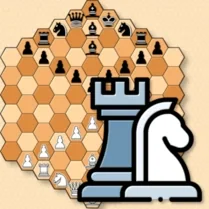
Common Core State Standards
Every game supports specific Common Core standards. Browse the full standards library.
Practice by Skill
Games by Grade
What is Hexagonal chess
Take your chess skills to a new dimension with a hexagonal board that changes everything. It's a strategic puzzle for anyone ready to rethink the classic game.
How to Play
Move your pieces across the hexagonal grid, using each unit's unique movement rules to capture the opponent's king. Plan several turns ahead and adapt to the unfamiliar geometry to checkmate your foe.
Tips for Playing
- Control the central hexes early to give your pieces more room to maneuver.
- Study how each piece moves on the hexagonal board before diving into complex tactics.
- Keep your king shielded behind a formation of pawns, as the open diagonals can be dangerous.
- Use your bishops and rooks to dominate the longer lines that the hex grid creates.
- Don't rush your development; one hasty move can expose a weak point in your position.
Frequently Asked Questions
How is hexagonal chess different from standard chess?
The board uses hexagonal tiles instead of squares, so pieces move along different axes. This changes strategies and makes the game feel fresh.
What are the movement rules for pieces in hexagonal chess?
Each piece follows its own movement pattern adapted to the hex grid. For example, rooks move in straight lines along any of the three axes, while bishops move in lines that bend at 60-degree angles.
Can I play against a computer or a friend?
Yes, the game typically offers both options, letting you challenge an AI opponent or play locally with another person.
Is it easy to learn if I already know chess?
If you know standard chess, you'll pick up the basics quickly, but you'll need to unlearn some assumptions about piece movement. The core objective of checkmate remains the same.
Does the hexagonal board make the game harder?
It adds complexity because there are more possible moves and open lines. Players need to think more deeply about positioning and long-term plans.
Are there special rules like castling in this version?
Most versions of hexagonal chess omit castling because the geometry makes it impractical. The focus is on pure strategy and piece coordination.