Classic Nonogram
Classic Nonogram takes the beloved Japanese puzzle format and puts it right in your browser. Each puzzle presents a grid with numbers alongside the rows and columns. These numbers act as a key, telling you exactly how many consecutive filled cells belong in that line. By cross-referencing the horizontal and vertical hints, you deduce which squares to mark and which to leave empty, slowly bringing a hidden pixel picture to life. The game offers a clean, minimalist interface that keeps your focus squarely on the logical challenge ahead. What makes Classic Nonogram so appealing is its perfect balance of calm and concentration. It starts gently, easing you into the mechanics with smaller grids, then gradually introduces larger, more intricate puzzles that demand careful reasoning and planning. Each solved puzzle delivers a satisfying sense of accomplishment as the final image pops into view. Whether you have a few minutes or a long stretch of time, these puzzles provide a mentally stimulating escape that exercises your pattern recognition and deductive skills without any time pressure or stress.
 WaffleMath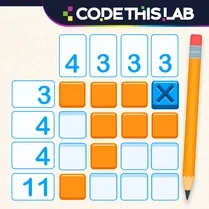
Common Core State Standards
Every game supports specific Common Core standards. Browse the full standards library.
Practice by Skill
Games by Grade
What is Classic Nonogram
Dive into a world of number-driven art with Classic Nonogram. Each puzzle is a fresh grid of possibilities, waiting for your logic to unlock the picture within.
How to Play
Examine the numeric clues above each column and beside each row, then decide which cells to fill in or mark as empty based on those hints. Work through the grid methodically, using logic alone to reveal the hidden image.
Tips for Playing
- Start with rows or columns that have a single large number, as they often determine many cells immediately.
- Use the X marker to note definitely empty cells, which helps clear the grid and simplifies future deductions.
- When a clue says a row has groups of 2 and 1, consider all possible placements before committing to fill a cell.
- For larger puzzles, break the grid into sections and solve one area at a time to avoid feeling overwhelmed.
- Double-check your progress by comparing filled cells with the row and column clues before moving on.
Frequently Asked Questions
What is the goal of Classic Nonogram?
The goal is to fill in the correct cells of a grid based on numeric clues alongside each row and column to reveal a hidden pixel art picture.
How do the numbers in the clues work?
Each number represents a group of consecutive filled cells in that row or column, with at least one empty cell between groups. The order of numbers matches the order of groups from top to bottom or left to right.
Can I make mistakes while playing?
Yes, you can fill cells incorrectly, but the game will typically highlight errors or allow you to erase them, so you can correct your logic as you go.
Is Classic Nonogram suitable for beginners?
Absolutely. The game starts with simple small grids that teach you the basics, then gradually increases in complexity, making it accessible for newcomers and challenging for veterans.
Are there different difficulty levels?
Yes, puzzles come in various sizes and complexity, so you can choose how challenging you want your experience to be.
What happens when I finish a puzzle?
Once you correctly fill all cells, the hidden picture is revealed, and you can move on to the next puzzle to keep the fun going.
Related Puzzle Games

 Roll Out! Exit from traffic
 Pentomino
 Yamabusi. Japanese Crosswords
 Sudoku Guru - classic sudoku
 Complete the block puzzle
 Nonogramm: Nono cross
 Sudoku Com
 Sudoku - logic game
 Sudoku Master
 Assemble Block Puzzle
 Assemble blocks in puzzle
 Beautiful Nonograms - Japanese crossword puzzle
 Block Puzzle Sudoku
 Catland block 9x9
 Classic minesweeper
 Classic Sudoku
 Color Sudoku
 Flow Block