Space physics
Space Physics drops you into a silent universe where Newton's laws are the only rulebook. Your vessel drifts through dense fields of rock and ice, with no friction to slow you down and no atmosphere to cushion mistakes. Success depends on reading the gravitational fields around you—planets pull, moons nudge, and every burst of thrust changes your trajectory in ways that ripple across space. This is a game of controlled chaos, where patience and precision matter far more than raw speed. The core loop is deceptively simple: reach the finish line without smashing your hull. But obstacles never sit still, and gravity never sleeps. You'll need to chain slingshot maneuvers, brake at the right instant, and learn when to let go of the controls entirely. The satisfaction comes from those moments when a perfectly timed flyby flings you past a wall of asteroids, or a soft landing on a cratered moon sets you up for the next leap. With each level, the cosmic puzzle deepens, daring you to master the art of moving through nothing at all.
 WaffleMath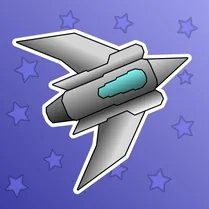
Common Core State Standards
Every game supports specific Common Core standards. Browse the full standards library.
Practice by Skill
Games by Grade
What is Space physics
Space Physics is a minimalist arcade puzzle where every rocket burn and drift matters. Chart your course through asteroid belts and planetary fields, and feel the pull of real orbital mechanics.
How to Play
Use your ship's thrusters to accelerate, decelerate, and rotate in zero gravity. Study the gravitational influence around you to plan your route, and manage your fuel to avoid being stranded.
Tips for Playing
- Cut thrust early to let momentum carry you—burning constantly wastes fuel and overshoots targets.
- Approach planets at an angle rather than head-on to gain a natural slingshot boost.
- When drifting, lightly tap the opposite thruster to fine-tune your trajectory instead of fighting the motion.
- Watch the visual indicators for gravity wells to predict changes before they pull you off course.
- If you're about to crash, use a short burst to redirect, not to stop—just grazing the surface can still save your run.
Frequently Asked Questions
What is the main objective in Space Physics?
You guide a spaceship from a start point to an end point through hazardous terrain. The goal is to reach the finish without crashing your vessel.
Do I need to refuel during levels?
Fuel is limited, so you can't just spam thrust. Some levels include fuel pickups, but efficient flying is key to surviving longer distances.
How does gravity affect the ship?
Planets and moons exert gravitational pull, bending your path as you pass by. This can be used to slingshot around obstacles or to adjust your speed without burning fuel.
Are there different difficulty settings?
The game's challenge is built into the level design, increasing as you progress. You'll face denser asteroid fields and more complex gravity interactions.
What happens if I run out of fuel?
If your fuel hits zero, you lose control and will drift until you hit something, ending the attempt. You'll restart the level from the start.
Is there a way to reset a level quickly?
Yes, there is a quick restart function. It's useful when your trajectory goes wrong and you want to try a fresh approach.
Related Puzzle Games
 Big Black Gravity Hole
 Escape Orbit
 Physics Sandbox
 Spaceflight Simulator
 Solar Smash
 Melon Playground
 Run 3
Run 3 Run 2
Run 2 Run
Run Car Crash Test Simulator
 Bridge Construction Simulator
 Orbital Daggers
 Stunt Car Simulator 3D
 Space Rocket Simulator
 Car Demolition Simulator 3D
 Extreme Car Crash Simulator
 Car Crash Test
 Bricks Breaker - Gravity Balls