Obby: IQ Escape from the Laboratory
In Obby: IQ Escape from the Laboratory, the setting is a sprawling research facility that has gone dark. Instead of a straightforward platforming run, each section of the lab presents a distinct brain-teaser—from pattern recognition and sequencing puzzles to environmental riddles that gate your progress. The corridors are a maze of locked doors, pressure plates, and cryptic symbols, so you’ll need to observe your surroundings carefully and think several steps ahead. It’s a game that rewards patience and sharp observation over quick reflexes. Each puzzle is its own mini-challenge, built to test different kinds of thinking. Some require you to manipulate objects in the right order, while others ask you to decode visual clues hidden in the environment. As you advance, the puzzles layer complexity, and new mechanics are introduced to keep you on your toes. The goal is simple: use your wits to make it from the entrance to the final exit. There are no timers pressuring you, so you can take your time to reason through each obstacle at your own pace.
 WaffleMath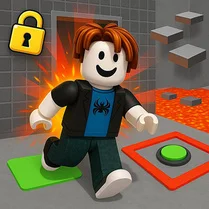
Common Core State Standards
Every game supports specific Common Core standards. Browse the full standards library.
Practice by Skill
Games by Grade
What is Obby: IQ Escape from the Laboratory
Enter a forsaken laboratory where every locked door is a puzzle and every puzzle hides a clue. Your only way out is to outsmart the facility’s defenses.
How to Play
Move your character through the lab and interact with objects like levers, buttons, and panels. Study each puzzle’s visual or logical cues, then apply the correct sequence or solution to unlock the path forward.
Tips for Playing
- Scan the entire room for symbols or color patterns that match the puzzle's clues.
- Try a systematic approach—test one variable at a time when facing multiple switches.
- Take note of any recurring shapes or numbers; they often hint at the correct order.
- If you get stuck, walk away for a moment and return with fresh eyes.
- Interact with everything at least once, as some objects only react under specific conditions.
Frequently Asked Questions
Is this game about speed or thinking?
It’s primarily about logical thinking, not speed. You can take as much time as you need to solve each puzzle, and there are no time limits.
What kinds of puzzles will I encounter?
Expect a mix of pattern recognition, sequence puzzles, memory challenges, and environmental riddles that require you to interact with objects in a specific order.
Do I need any special skills to play?
No, just basic platforming ability and a willingness to think carefully. The puzzles are designed to be solved by observing clues and reasoning logically.
How many levels are there?
The game features multiple distinct rooms, each with its own set of puzzles. The number can vary, but the difficulty gradually ramps up as you progress.
Can I skip a puzzle if I'm stuck?
There is no skip option. Each puzzle must be solved to advance, but you can leave and come back to it after taking a break.
Is the game suitable for all ages?
Yes, the puzzles are non-violent and rely on intellect rather than reflexes, making it family-friendly and accessible to most age groups.
Related Obby Parkour Games
 Cool Escape: Obby, man
 Obby: Find the key for cage! Save Sprunki
 Obby Tower: Prison
 Baby Bobby: Obby Escape
 Fire Jump: Escape Legends
 Garten of Banban: Parkour
 Mega Obby Prison Barry Escape
 MEGA OBBY: School Escape
 Obbie: Prison Break - Original
 Obby: Barry's Prison Break!
 Obby: Jetpack escape! +1 speed
 Run away with Brainrot from the Lava
 Survival and Prison Escape. Life and Obby.
 Your Obby Escape
 Only Up
 Geometry Dash
 Fun Obby
 Geometry Dash 2.2