Numbers: collect ten
Numbers: collect ten turns basic arithmetic into a satisfying brain teaser. The board is filled with numeric tiles, and your goal is to spot adjacent pairs whose values total exactly ten. When you tap a valid pair, both tiles vanish and you earn points, while fresh numbers drop in to take their place. It sounds simple, but the real test lies in planning ahead—each move reshapes the grid, and a single misstep can leave you with no viable pairs and a board that's quickly filling up. What makes this puzzle stand out is the constant push between quick thinking and careful strategy. Do you clear the obvious ten right away, or hold out for a chain that clears a larger area? As the difficulty ramps up, the number combinations become trickier, and the space to maneuver shrinks. With its clean presentation and straightforward mechanics, it's the kind of game that's easy to pick up but hard to put down, offering a fresh mental workout every time you play.
 WaffleMath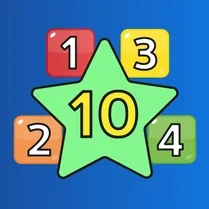
Common Core State Standards
Every game supports specific Common Core standards. Browse the full standards library.
Practice by Skill
Games by Grade
What is Numbers: collect ten
Numbers: collect ten is a minimalist puzzle where your arithmetic skills meet spatial reasoning. Pair up tiles that sum to ten and watch the board clear before your eyes.
How to Play
Tap two adjacent tiles (horizontally or vertically) whose numbers add up to exactly ten. Successfully matching them removes the tiles, scores points, and allows new tiles to appear.
Tips for Playing
- Always check for multiple possible pairs before making a move to set up future matches.
- Clear tiles from the center of the board to create more room for new numbers.
- Don't rush—take a moment to scan the entire grid for hidden combinations.
- When faced with a choice, prioritize pairs that open up fresh matching opportunities.
- Keep an eye on the tile distribution; balancing the numbers can prevent dead ends.
Frequently Asked Questions
What happens if I run out of pairs to match?
If no two adjacent tiles add up to ten, the game ends. You'll need to start a new round to keep playing.
Can I match tiles diagonally?
No, only horizontally or vertically adjacent tiles can be paired together.
Is there a time limit?
There's no timer in the standard mode, so you can take as long as you need to find the right moves.
How do I score more points?
You score points for each successful pair, and creating chain reactions or clearing larger portions of the board may result in bonus points.
What numbers can appear on the tiles?
Tiles typically feature single-digit numbers, with higher numbers appearing as the game progresses to increase the challenge.
Does the game get harder over time?
Yes, the difficulty increases as more tiles appear and the board fills up faster, requiring sharper planning and quicker recognition of pairs.
Related Puzzle Games
 Numbers 19
 Numbers 2244
 Master of Numbers
 Digit Shooter
 Seven!
 Growing numbers: Connect and Purify
 Merger: One Million
 Growing numbers
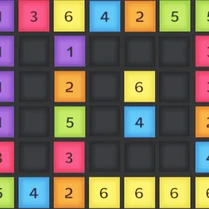 Numbers: 10 in a Row
 The New Puzzle 2248
 Merge Squad: 2048
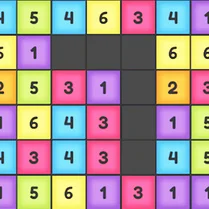 Numbers: merge 7
 Numbers in math
 Addition and Subtraction
 Binary trainer
 Connect: Merge Number Puzzle
 Digits (Numbers, seeds)
 Infinite Math