Geometry dash flying saucer
Geometry Dash Flying Saucer swaps the iconic cube for a levitating disc, trading ground hops for a floaty, momentum-heavy glide. Your saucer bobs up and down in a constant pulse, and each tap gives it a boost upward, forcing you to thread through corridors of spikes, saw blades, and shifting platforms. The visual style strips everything to crisp polygons and stark contrasts, so every hazard reads clearly against the background, letting you focus purely on timing and trajectory. The soundtrack isn't just ambiance—it's your co-pilot. Obstacles align with musical beats, and the rhythm of the song provides a natural cue for when to tap or hold steady. Success demands a blend of patience and reflex, as you learn each level's pattern and adjust your taps to the saucer's unique drift. It's a test of precision, memory, and a good ear, offering a fresh twist on the classic rhythm-platformer formula.
 WaffleMath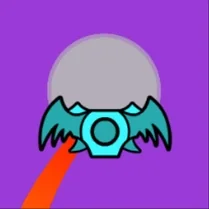
Common Core State Standards
Every game supports specific Common Core standards. Browse the full standards library.
Practice by Skill
Games by Grade
What is Geometry dash flying saucer
Take command of a floating saucer and ride the rhythm through a series of razor-sharp geometric courses. Each level is a syncopated puzzle where timing is everything.
How to Play
Tap or click to make the saucer rise; release to let it naturally descend. Navigate through the level by pacing your taps to avoid obstacles and reach the end.
Tips for Playing
- Watch the saucer's float pattern—it rises and falls on its own, so only tap when you need extra height.
- Use the music as a guide; many obstacles are placed on the beat, so listening closely can help you time your taps.
- Stay calm in tight corridors—small, measured taps are better than frantic ones.
- Learn each section by heart; memorizing the layout makes it easier to anticipate tricky jumps.
- Your first few attempts are for learning, not for winning—expect crashes and use them to refine your timing.
Frequently Asked Questions
What makes the flying saucer different from the regular cube?
The saucer has a distinct floating physics: it bobs continuously, and each tap gives a short lift. Unlike the cube, there's no instant ground snap, so you must manage its momentum carefully.
Do I need to tap to the exact beat of the music?
Not every tap has to land on the beat, but the rhythm is a hint. Obstacles and gaps are often placed in sync with the soundtrack, so using the music as a cue can make your timing more accurate.
Is there a checkpoint system?
There's no mid-level checkpoint; each run starts from the beginning. The goal is to master the entire level in one clean, rhythmic flight.
Can I change the game's speed or difficulty?
The game's base speed is fixed, but some versions may offer different modes. Your main control is over tap timing, not the level's pace.
What's the best strategy for the spike clusters?
For spike walls, try to maintain a steady height by tapping in a regular pattern, then do a small double-tap to clear the last hazard in the cluster.
Why do I keep crashing at the same spot?
Repeatedly failing at one section usually means your rhythm is off there. Focus on that segment, watch how the saucer moves, and practice its exact tap sequence without rushing.
Related Runner Games
 Geometry Dash: Flight Machines
 Geometry Dash
 Geometry Dash 2.2
 Geometry Dash 2.2: Arrow
 Geometry Dash 2D
 Geometry Dash: Arrow 2.2
 Geometry Dash 2.2: New Arrow
 Geometry Dash Finally
 Geometry Dash: Ball 2.2
 Easy Geometry dash
 Geometrycal Dash 2 - Platformer
 Geometry Dash: Crazy Wave
 Geometry Dash Forms
 Geometry Dash: Geo
 Geometry Dash Levels
 Geometry Dash Master
 Geometry Dash Rocket
 Geometry Dash with SchoolBoy