Who Is More Attentive: We Play Together
This game turns careful looking into a lively contest. You and a partner face the same set of picture pairs, each hiding a handful of small alterations. The twist is that you're not just solving on your own—you're competing to catch more of these changes than the other player. It's a test of how quickly your eyes can pick up on swapped colors, missing objects, or shifted details, and it keeps everyone on edge until the final second. The action stays brisk and social. Rounds are short, so you can jump back in after each one, and the difficulty keeps your attention sharp. Whether you're playing side by side or taking turns, the game rewards a calm, systematic approach over frantic clicking. It's an easy way to turn a quiet afternoon into a playful rivalry, and it works just as well for two friends as it does for a small group taking turns.
 WaffleMath
Common Core State Standards
Every game supports specific Common Core standards. Browse the full standards library.
Practice by Skill
Games by Grade
What is Who Is More Attentive: We Play Together
Sharpen your eyes and challenge a friend in this fast-paced spot-the-difference contest. The player with the keenest observation wins the round.
How to Play
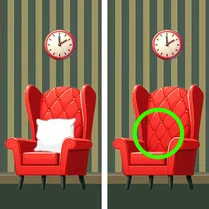
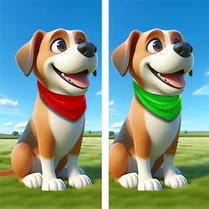
Examine each pair of images side by side and tap or click on any difference you find. Keep going until time runs out, and try to outscore your opponent.
Tips for Playing
- Scan each image in the same pattern, like left to right, to avoid missing spots.
- Look for small details like shadows, text, or background items that often change.
- Don't spend too long on one area; move on and return if time allows.
- Compare colors and shapes carefully, not just positions.
- Stay calm and methodical—rushing often leads to misclicks.
Frequently Asked Questions
Can I play this game alone?
The game is designed for two players, but you can still practice by setting a timer and challenging yourself to find all differences quickly.
What happens if I click on a wrong spot?
In most cases, clicking a wrong area gives you a small penalty, like a brief time loss, so try to be accurate.
Is there a limit on how many differences I can find per round?
No, you can find as many as you can before the timer ends, but the total number of differences in each image pair is fixed.
Can I adjust the difficulty level?
Yes, some versions of the game let you choose from easy, medium, or hard, which changes how subtle the differences are.
What do I need to play with a friend?
You typically play on the same device, taking turns or competing simultaneously, so just one screen is enough.
Related Escape Hidden Games
 Bad Ice Cream 3
 Crash Simulator Multiplayer
 Phasmophobia
 KS 2 Teams
 SCP Secret Laboratory
 Dino Bros
 SWAT for two players
 Surviving the apocalypse with a friend
 Parkour of Noobik: Obby Multiplayer
 Death Forest: Horror Multiplayer
 Find 7 Differences: Game of attention
 Find the Difference on Photos
 Robbery FPI bank - 2 Players
 Find the Difference for Free
 Differences
 Obby with Friends Online
 Obby: Mini Games with Friends
 Differences Online Journey