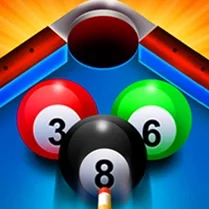
Pool Club: 8 Ball Billiards
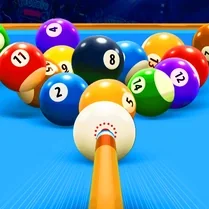
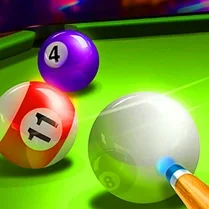
Step up to the table in Pool Club: 8 Ball Billiards, where the click of the cue and the roll of the balls create a satisfying simulation of the classic pub game. Every shot demands a thoughtful approach—you'll need to judge the power, spin, and contact point to send the cue ball exactly where you intend. The game's physics-driven engine makes each break and follow-up feel authentic, turning simple potting into a tactical exercise in positioning and foresight. Your goal is straightforward: clear your assigned group of balls—solids or stripes—before lining up the final, decisive shot on the 8-ball. But the table is rarely kind, and a poorly planned shot can leave your opponent an open look. Managing the cue ball's path after contact is just as important as sinking the object ball. Whether you're playing solo to refine your skills or facing off in a match, every rack offers a fresh puzzle of angles, rebounds, and ball clusters to unravel.
 WaffleMath
Common Core State Standards
Every game supports specific Common Core standards. Browse the full standards library.
Practice by Skill
Games by Grade
What is Pool Club: 8 Ball Billiards
Grab your cue and step onto the green felt. Pool Club: 8 Ball Billiards brings the tension of a real match to your screen, with every shot a blend of skill and nerve.
How to Play
Use your mouse or touch to aim the cue, adjust power with a swipe or slider, then release to strike and send the cue ball toward your target. Sink all your balls first, then pocket the 8-ball to win.
Tips for Playing
- Always aim to leave the cue ball in a spot that makes your next shot easy, not just to pot the current ball.
- Apply backspin to stop the cue ball after contact, which helps avoid scratching or disturbing your grouped balls.
- Look for the easiest shot first, even if it isn't the most obvious—potting a hanging ball builds confidence.
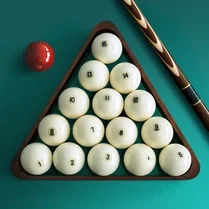
- When breaking, hit the head ball square on with full power to spread the rack more evenly.
- Use the rails to your advantage—bank shots can rescue you from tight angles or clusters.
Frequently Asked Questions
What are the rules for sinking the 8-ball?
You must first clear all of your assigned balls—either solids or stripes—before you can legally pocket the 8-ball. If you sink the 8-ball early or scratch while shooting it, you lose the game.
Can I play against a friend on the same device?
Yes, the game supports local two-player mode on a shared screen. Each player takes turns shooting, and the same rules apply as in a standard match.
What happens if I scratch on a shot?
If you pocket the cue ball, your opponent gets ball-in-hand, meaning they can place the cue ball anywhere behind the head string (or on the table, depending on the rule set). It's a costly mistake, so plan your shots carefully.
Is there a way to practice alone?
Yes, you can choose a single-player practice mode where you play against the AI. It's a great way to learn angles, spin, and table control without the pressure of a real match.
How do I improve my aim and power control?
Spend time in practice mode to experiment with different cue positions and power levels. Notice how the cue ball reacts to spin and try to predict its path after contact—this is key to consistent play.
What does 'spinning' the ball do?
Applying sidespin (left or right) changes the angle at which the cue ball rebounds off the object ball and the rails. It's a useful tool for breaking out clusters or repositioning for your next shot.