Pong
Pong strips gaming down to its purest form: a glowing ball, two paddles, and an arena where every rally is a test of timing and anticipation. This digital table tennis classic drops you into a minimalist court where the only goal is to send the ball past your rival's defenses. The elegant simplicity of its two-dimensional physics creates a surprisingly deep contest of angles, speed, and nerve, making each exchange feel fresh even after decades of play. What keeps players returning is the game's relentless pace and the satisfying snap of paddle meeting ball. Whether you're facing off against an AI opponent or a friend on the same keyboard, every rally builds tension as you try to outthink, outmaneuver, and outlast your challenger. Victory depends on reading the ball's trajectory, positioning yourself just right, and striking at the perfect moment to put it out of reach. Pong is the kind of game that looks effortless yet keeps your heart racing from the first serve to the final point.
 WaffleMath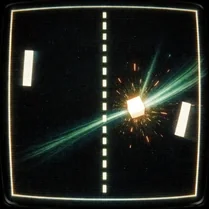
Common Core State Standards
Every game supports specific Common Core standards. Browse the full standards library.
Practice by Skill
Games by Grade
What is Pong
Pong is the original arcade duel that turned a flickering square into a competitive obsession. It's you, a paddle, and a ball — with nothing but skill separating you from your opponent.
How to Play
Move your paddle vertically to intercept the ball and send it back toward your opponent's side. The first player to make the ball slip past the other's paddle and score 11 points wins the match.
Tips for Playing
- Try to hit the ball with the center of your paddle for a straight, predictable return, or the edges for sharp angles.
- Anticipate the ball's bounce off the top and bottom walls to stay perfectly aligned with its path.
- Mix up your shots by varying the point of contact with the paddle to keep your opponent guessing.
- Stay centered when you're not chasing the ball, so you can react quickly to a sudden change in direction.
- Keep your eye on the ball's speed and angle — it will tell you where to be before the ball gets there.
Frequently Asked Questions
What is the goal in Pong?
The goal is to score points by getting the ball past your opponent's paddle. The first to reach a set score, usually 11, wins the match.
Can I play Pong against a friend?
Yes, Pong supports two-player mode where you and a friend can face off using the same keyboard, with one controlling each paddle.
How do I control the ball's direction in Pong?
The ball's direction depends on where it hits your paddle. Hitting it with the center sends it straight, while the edges send it at an angle.
What happens when the ball hits the top or bottom wall?
The ball bounces off the top and bottom walls, changing its vertical direction while continuing its horizontal path.
Is there a way to win faster by making the ball go faster?
The ball speeds up naturally after each paddle hit, so the longer a rally lasts, the harder it gets to return. Your best bet is to end the point with a well-angled shot.
What are the basic rules of Pong?
Each player has a paddle, and the ball is put into play from the center. If you miss the ball and it passes your paddle, your opponent scores a point, and the ball is served again.