Pleasant balls
Pleasant balls puts a calm twist on the classic match-and-merge formula. Instead of racing against a clock, you take your time to study the board and link identical orbs. Each successful connection fuses them into a larger sphere, which can then be matched again for even bigger combos. The trick is figuring out the right order of merges, because every chain reaction shifts the layout and opens up fresh paths—or occasionally paints you into a corner. What sets this title apart is its soothing pace and gentle visual feedback. There is no rush, just a quiet satisfaction as clusters pop and reform. As the board evolves, you'll need to balance short-term gains against long-term strategy: clear space for new balls while setting up a cascade of reactions that can wipe out entire sections at once. With its easy-to-grasp rules and increasingly clever level designs, it's a perfect pick when you want a brain workout without the intensity.
 WaffleMath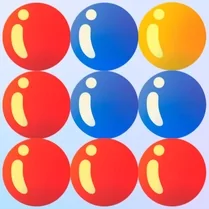
Common Core State Standards
Every game supports specific Common Core standards. Browse the full standards library.
Practice by Skill
Games by Grade
What is Pleasant balls
A zen-like puzzle where matching colorful orbs sets off elegant chain reactions. Can you clear the entire board with smart, well-timed merges?
How to Play
Click or tap on colored balls to select and connect matching ones. Merge at least two of the same color to create a larger sphere and clear space on the board.
Tips for Playing
- Always scan the whole grid before making a move to spot potential chain reactions.
- Try to merge larger balls first—they offer more points and can open up cramped areas.
- Save your moves to set up cascading combos instead of just pairing the nearest matches.
- If you're stuck, focus on clearing the lowest row to drop high balls into better positions.
- Watch the order of merges—sometimes a small change can turn a dead end into a winning streak.
Frequently Asked Questions
How do you win in Pleasant balls?
The goal is to clear the entire board by merging all matching balls until no pieces remain.
Is there a time limit in the game?
No, the game is turn-based and lets you think at your own pace without any timer pressure.
What happens when you merge two balls?
They combine into a single, larger ball of the same color, which can then be matched again with others of its kind.
Can you undo a move?
That depends on the version you're playing; some builds include an undo option, while others do not.
Are there different difficulty levels?
The game gradually introduces more complex layouts and tougher grids as you progress through the levels.
Related Match Bubble Games
 Merge Balls: Fruit Cocktail
 Merge: Glass Balls!
 Merge the flower balls 2048
 Cells PuzzleHeap
 Connect Balls: Magical Fusion
 Drop Balls!
 Chicken Merge
 "Ball Fusion: Magical Adventure"
 Ball Run 2048: merge number
 Jewel Merge Dropping
 Merge Fantasy
 Stick Merge
 MiSide - Original Version
 Stickman! Count Masters
 2048 Ballz
 Army Evolution: Merge & Tactics
 Brawl Box: Merge Stars
 MiSide