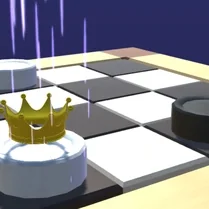
Pawn duel
Pawn Duel strips chess down to its most fundamental infantry unit, offering a distilled tactical experience that rewards meticulous planning over brute force. The battlefield is a modest grid where two opposing lines of pawns face off, each move a deliberate step toward dominance. Victory comes not from reckless charges but from orchestrating positions that force your opponent into impossible choices, turning every match into a tense mental sparring session. The genius of Pawn Duel lies in its elegant simplicity. With no queens, rooks, or knights to complicate matters, you must rely entirely on pawn dynamics—their forward-only movement, diagonal captures, and the subtle power of promotion. Each turn presents a fresh puzzle: do you advance to claim space, hold ground to bait a mistake, or sacrifice a pawn to break through? The compact scale ensures that a single misstep can cascade into defeat, while a well-timed maneuver can dismantle an entire defense. It's a quick yet deeply satisfying challenge for strategy enthusiasts.
 WaffleMath
Common Core State Standards
Every game supports specific Common Core standards. Browse the full standards library.
Practice by Skill
Games by Grade
What is Pawn duel
Step onto a minimalist chessboard where only pawns clash in a battle of wits. Outthink your rival by mastering the art of the advance and the ambush.
How to Play
Take turns moving your pawns forward one square at a time, or diagonally to capture an enemy pawn. The goal is to eliminate all opposing pawns or reach the far side of the board to promote.
Tips for Playing
- Control the center early to restrict your opponent's movement options.
- Use pawn chains to create a shield that's difficult for the enemy to break through.
- Sacrifice a pawn if it opens a clear path to promotion.
- Always consider your opponent's possible responses before committing to a move.
- Keep your back row intact to prevent promotion opportunities for your foe.
Frequently Asked Questions
Can pawns move backwards in Pawn Duel?
No, pawns can only move forward, just like in standard chess. They capture diagonally forward but never retreat.
What happens when a pawn reaches the opposite side?
The pawn is promoted, typically to a more powerful piece, which can turn the tide of the duel. In some variations, this grants an instant win.
Is there a time limit for each turn?
There is no time limit, so you can take as long as you need to plan your strategy. However, your opponent might grow impatient in casual play.
How many pawns do each player start with?
Each player starts with a set number of pawns, usually six or eight, arranged in a line. The exact count may vary depending on the board size.
Can I win by capturing all enemy pawns?
Yes, eliminating all of your opponent's pawns secures a victory. Reaching the other side with a pawn also achieves success.
Are there any special moves like en passant?
En passant is not typically included in Pawn Duel. The focus is purely on forward movement and diagonal captures, keeping the rules simple.