Nivernaise Solitaire
Nivernaise Solitaire reimagines the classic patience card game with a sharp numerical focus. Instead of stacking suits in order, you'll study a pyramid-shaped tableau and hunt for pairs of cards whose values combine to exactly thirteen. Kings are a special case, vanishing on their own since they already equal thirteen. Success hinges on spotting connections quickly and planning several moves ahead, as the layout shifts with every removal. This brainy puzzle takes patience and arithmetic in equal measure. The challenge lies not just in matching numbers but in deciding which pairs to clear first to avoid dead ends. With a modest deck and a clean, click-friendly interface, it offers a satisfying solo pastime for fans of logic games and card classics alike.
 WaffleMath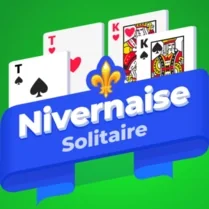
Common Core State Standards
Every game supports specific Common Core standards. Browse the full standards library.
Practice by Skill
Games by Grade
What is Nivernaise Solitaire
A fresh card puzzle where logic and arithmetic meet. Clear the pyramid by pairing cards that total thirteen.
How to Play
Click two face-up cards in the pyramid whose values add up to 13 to remove them. Tap a King to discard it instantly, since its value is already 13.
Tips for Playing
- Always clear Kings early to open up more of the tableau.
- Scan the entire pyramid before making a move to spot hidden pairs.
- Prioritize removing cards that unlock lower layers, as they restrict your options.
- Keep track of which high cards remain, since they only pair with low ones.
- If you get stuck, try clearing pairs that involve cards near the bottom first.
Frequently Asked Questions
What does 'pairs that sum to 13' mean?
Each card has a value: Aces are 1, numbered cards count as their face value, and face cards are Jack=11, Queen=12, King=13. You remove two cards when their values add up to 13, such as a 5 and an 8.
Can I remove a King by itself?
Yes, a King has a value of 13, so it can be removed alone because it already meets the target sum.
What happens if I run out of valid pairs?
The game ends when no more pairs sum to 13. You win if you clear the entire pyramid, so careful planning is essential.
Is this game based on a traditional solitaire rule?
It shares the pyramid layout and matching logic with classic pyramid solitaire, but the specific rule of using sums to 13 is a well-known variant.
Do I need to use the whole deck?
In the standard version, a single deck is used to build the pyramid. Some variants include a draw pile, but the core game focuses on the pyramid.
How do I know which card is face-up?
Cards that are not covered by other cards in the pyramid are available to click. Covered cards remain hidden until the cards above them are removed.
Related Card Board Games

 Cat's Solitaire
 CityMix Solitaire
 «Crazy Quilt» Solitaire
 Emerland Solitaire 2
 Emily's Hotel Solitaire
 Gold of Gnomes Solitaire
 Jigsaw Solitaire
 Jigsolitaire
 Jigsolitaire Deluxe
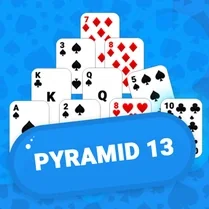 Pyramid 13
 Pyramid Solitaire
 Pyramid Solitaire Quest
 Solitaire Harvest
 Solitaire HD
 Solitaire: Heroes Evolution
 Solitaire Jazz Travel
 Solitaire Josephine and the Forty Thieves
 Solitaire Journey