Go Baduk Weiqi
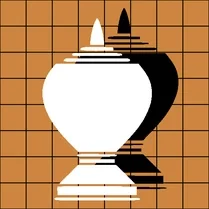
Go Baduk Weiqi is a timeless contest of intellect where two opponents alternately place black and white stones on a simple grid. The game's elegance lies in its minimal rules, yet the tactical depth is immense. Each move influences the entire board, as players aim to secure open areas and outmaneuver their rival's formations. Victory comes not from capturing many pieces but from encircling larger expanses of territory with efficient stone placement. This digital adaptation faithfully recreates the classic board game, offering a clean and intuitive interface that lets you focus on pure strategy. Whether you're a beginner exploring the fundamentals or a seasoned player honing your skills, each match presents a fresh puzzle of foresight and adaptability. The game's calm pace invites careful deliberation, turning every session into a rewarding mental exercise.
 WaffleMath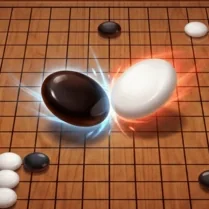
Common Core State Standards
Every game supports specific Common Core standards. Browse the full standards library.
Practice by Skill
Games by Grade
What is Go Baduk Weiqi
Step into one of the oldest strategic board games known to humanity. Outthink your opponent and claim the board by building unassailable positions.
How to Play
Take turns placing your stones on empty intersections of the grid. Your goal is to surround more vacant points than your opponent; capture enemy stones by fully enclosing them.
Tips for Playing
- Begin by placing stones in the corners and edges to build influence efficiently.
- Avoid creating isolated stones that can be easily surrounded.
- Learn to recognize 'atari' positions where your stones are one step from capture.
- Consider the entire board, not just local fights, to maximize your territory.
- Balance between expanding your own area and reducing your opponent's potential.
Frequently Asked Questions
What is the objective of Go Baduk Weiqi?
The goal is to control more empty territory (intersections) on the board than your opponent by the end of the game.
How are stones captured?
A stone or group of stones is captured when all adjacent empty points (liberties) are occupied by the opponent's stones.
Can I place a stone that would result in my group having no liberties?
No, that is a self-capture and is not allowed, unless that move captures one or more of the opponent's stones, freeing liberties.
What does 'ko' mean in Go?
Ko is a rule preventing immediate repetition of the same board position, ensuring the game progresses. You must wait a turn before recapturing in a ko situation.
How do I know when the game is over?
The game ends when both players pass consecutively, feeling no beneficial moves remain. Then you count territory and prisoners to decide the winner.
Are there different board sizes available?
Typically yes, but this version may offer a standard 19x19 board, and perhaps smaller sizes like 9x9 or 13x13 for quicker games.