Color Lines 3D
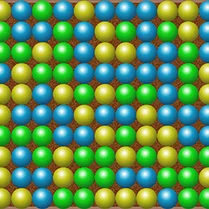
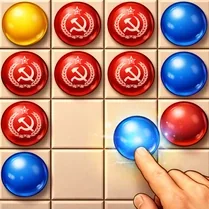
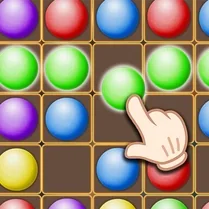
Color Lines 3D drops you onto a three-dimensional grid where glossy balls in different hues wait to be organized. The twist is that every turn you take introduces fresh spheres onto the board, so each decision carries weight. You must find clever ways to form continuous sequences of matching colors while keeping the playing field from becoming overcrowded. The visual depth makes it easier to spot potential alignments, but the mounting pressure keeps your mind sharp. As the game progresses, the board fills up faster, and your options shrink. You'll need to think several moves ahead, weighing where to place each ball to create future chains while clearing space for what's coming. The polished 3D presentation adds a layer of enjoyment, turning a classic puzzle concept into a fresh experience. Whether you're a casual player or a puzzle enthusiast, this game offers a satisfying mental workout that rewards careful planning.
 WaffleMath
Common Core State Standards
Every game supports specific Common Core standards. Browse the full standards library.
Practice by Skill
Games by Grade
What is Color Lines 3D
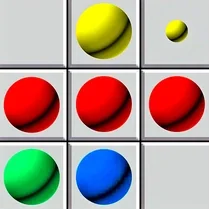
Test your spatial reasoning as you manipulate colorful orbs into straight rows of five or more. Each move adds new balls to the board, demanding strategic thinking to keep the grid manageable.
How to Play
Click a ball to select it, then click an empty cell to move it there. Form a straight line of five or more matching colors in any direction to clear them from the board.
Tips for Playing
- Always check for potential lines before making a move, not just after.
- Keep the edges of the board clear to give yourself more flexibility.
- Prioritize moves that create two lines at once for maximum efficiency.
- Don't rush—take a moment to scan all three dimensions of the grid.
- Try to leave a spare space near the center for critical moves later.
Frequently Asked Questions
What happens when I form a line of five or more balls?
All balls in that line are removed from the board, freeing up space and giving you extra room to maneuver.
How many new balls appear after each move?
Typically, three new balls are added to the board after every move, increasing the challenge.
Can I move any ball to any empty cell?
Yes, as long as there's a clear path in the grid—you can select any ball and place it in any empty cell.
Is there a way to see upcoming balls?
The next balls are shown in a queue, letting you plan your moves accordingly.
What happens if the board fills up completely?
If no empty cells remain, the game ends. The goal is to keep clearing lines before that happens.
Are there different difficulty levels?
The difficulty naturally increases as the board fills up, but the core rules remain the same throughout.