Car Crash Physics
Car Crash Physics is a sandbox playground where the main event is the crunch. Instead of racing to a finish line, your goal is to orchestrate the most dramatic, chaotic collisions possible. The game’s engine simulates real-world physics, so every impact is unique—metal folds, glass bursts, and components tear loose based on the speed and angle of the crash. You’re not just smashing cars; you’re experimenting with force, momentum, and material weakness. Choose from a lineup that includes sedans, trucks, and even buses, then launch them into each other or into static obstacles. The aftermath is rendered in satisfying detail, letting you study the wreckage from any camera angle. Whether you’re aiming for a massive multi-vehicle pileup or a single, perfect head-on collision, the game rewards creativity over raw speed. There’s a quiet, almost scientific pleasure in tweaking the setup to see just how much damage you can inflict.
 WaffleMath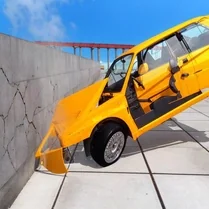
Common Core State Standards
Every game supports specific Common Core standards. Browse the full standards library.
Practice by Skill
Games by Grade
What is Car Crash Physics
A physics-driven crash sandbox where you control the mayhem. Tune your approach and watch metal deform in real time.
How to Play
Pick a vehicle from the garage, then accelerate, brake, or steer to ram into other cars or obstacles. The damage you deal is scored based on the force and severity of the impact.
Tips for Playing
- Angle your vehicle slightly off-center in head-on crashes to increase deformation and scoring.
- Use heavier vehicles like buses to plow through smaller cars for more spectacular results.
- Try a two-stage collision: hit one car to send it flying into a second target.
- Experiment with speed—sometimes a slow, high-angle impact creates more damage than a full-speed run.
- After a crash, use the replay camera to see exactly which parts bent or snapped.
Frequently Asked Questions
What types of vehicles can I drive?
The game includes a mix of cars, trucks, and buses, each with different weights and durability.
Is damage modeled realistically?
Yes, the physics engine handles deformation, part detachment, and glass shattering based on impact force.
How is the score calculated?
Points are awarded based on the number of parts destroyed and the amount of deformation, with heavier vehicles giving more points.
Can I view crashes from different angles?
Yes, you can rotate the camera and use a slow-motion replay to analyze the damage in detail.
Does the game run on low-end devices?
It is designed to run smoothly in most modern browsers, though very low-end hardware may experience slower physics simulation.
Is there an end goal or endless mode?
The main focus is sandbox play, but there are several challenge levels that require reaching a certain damage threshold.
Related Simulation Tycoon Games
 Car Crash and Destruction Simulator 3D
 Extreme Car Crash Simulator
 Car Accident Car Crash Simulator
 Accidents and Destruction of Cars 3D
 Сar Сrash Simulator!
 Auto Wreck Simulator
 Car Accident and Crash Test Simulator
 Cars: Build & Crush
 Car Smash! Car Crash Simulator
 Car VS Pit: Crash-Test
 Cliff Jump - Car Crash 3D
 Deadly Descent - Crash test
 Destructive Car Crash Simulator
 Racing Simulator with Crashes
 Smash my Car
 Crash Simulator Multiplayer
 AutoNG.Destroy
 Car Crash: Rockfall