1+1 balls
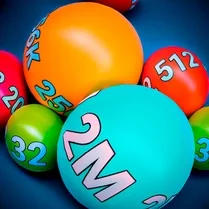
1+1 balls turns a deceptively simple premise into a delightful mental workout. Picture a grid where colorful orbs, each stamped with a number, sit waiting for your input. The core interaction is intuitive: slide one orb toward another of the same number, and they fuse into a single orb bearing the next value up. What begins as a gentle test of observation quickly evolves into a strategic dance, because every move shifts the entire layout and opens up new possibilities for chains of merges. The real satisfaction lies in orchestrating combos. When you align several matching orbs in sequence, they can collapse in a quick cascade, freeing space and boosting your score dramatically. But the board is unforgiving—as you create higher numbers, the orbs grow larger and occupy more room, and if the grid fills completely, the round ends. With a balance of luck and foresight, you'll find yourself constantly weighing immediate gains against long-term positioning, making each session a fresh puzzle to untangle.
 WaffleMath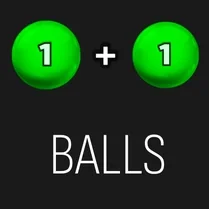
Common Core State Standards
Every game supports specific Common Core standards. Browse the full standards library.
Practice by Skill
Games by Grade
What is 1+1 balls
Ready for a number-merge puzzle that rewards careful planning? Drop into a colorful grid where matching orbs combine to reveal bigger digits.
How to Play
Drag an orb onto an adjacent orb with the same number to merge them into a single orb with the next number. Keep combining to create high values and score points, but watch out when the board gets crowded.
Tips for Playing
- Always look ahead to see if merging two orbs will create an immediate third match.
- Leave open spaces near high-number orbs to make future merges easier.
- Prioritize clearing clusters of low numbers early to prevent blockage.
- Avoid merging into a corner unless you have a clear escape route.
- Try to trigger chain reactions, as they clear space and multiply your score.
Frequently Asked Questions
What happens when I merge two same-number orbs?
They combine into one orb with the next higher number, for example two 2s become a 3.
Can I merge orbs that are not directly adjacent?
No, orbs must be adjacent horizontally or vertically to merge. You drag one onto another touching one.
How is the game lost?
The round ends when the grid is completely full and no more merges are possible.
Is there a way to undo a move?
Typically, there is no undo option; you must think carefully before each move.
Do larger numbers always take up more space?
Yes, as the number increases, the orb visually grows larger, occupying more of the grid.
What is the highest number you can reach?
There is no fixed limit; practical play often reaches high teens or twenties, but it depends on board space.
Related Match Bubble Games
 Ball Run 2048: merge number
 2048 Ballz
 Ball 2048
 Black Ball 2048
 Merge Balls Dots 2048
 Physical Balls 2048
 Balls 1024
 2048 3D Balls
 2048 Balls: Try to collect!
 2048 Colored Balls
 2048 Sort Ball
 3D Balls: Merge
 Ball 2048: Merge
 Drop Ball: Merge 2048
 Merge Balls 2048: Billiards!
 2048
2048 "Ball Fusion: Magical Adventure"
 Cubes 2048.io